Welcome to Official Portal of Agriculture Department, Sikkim!

 
logo user
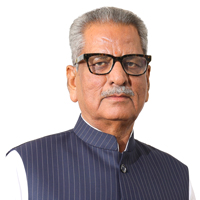
Om Prakash Mathur

Shri. Om Prakash Mathur

Hon'ble Governor of Sikkim
logo
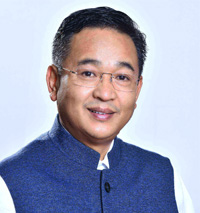
Prem Singh Tamang

Shri. Prem Singh Tamang

Hon'ble Chief Minister
Home About Us Contact Us

Shri Puram Kumar Gurung

Hon'ble Minister

Minister
Hon'ble Minister

Dr. S. Anbalagan, IFS

Hon'ble Secretary

Secretary
Hon'ble Secretary
Production Incentive

Incentives to agricultural production are continuously changing in response to shifts in both agricultural policies and agricultural prices. These shifts impact the production and consumption choices made by farmers and consumers, which in turn impact hunger and malnutrition, change labor markets, and shape the global picture on climate change.

Historically, updated information and data on agricultural incentives has been widely scattered and largely inaccessible on a global scale. The Ag Incentives Consortium aims to change this by bringing together key international organizations to provide comparable incentives data in a single location.

With web-based tools managed by IFPRI, the Consortium currently includes OECD, FAO-MAFAP, IDB, IFPRI, and the World Bank. Support is provided by the CGIAR Research Program on Policies, Institutions, and Markets (PIM).

The tools provided by Ag Incentives allow users to visually compare data for nearly 60 countries and 70 products over 10 years. Users can also download data in CSV format to perform their own analyses.

To find out more about the Consortium and available tools, visit the website.
For further information and any questions about our data, email us at info@ag-incentives.org.
Organic Mission

In order to re-establish previously damaged or destroyed ecological balance in nature, organic farming aims to correct unwanted results of wrong production practices by using; biological methods to control pests and diseases, to improve soil fertility, to contain environment and human friendly production systems, to ban the use of synthetic and chemical fertilizer and pesticides while encouraging organic and green fertilizing, crop rotation and soil conservation. From farm to table, organic farming has control methods for each  and every farm practices and provides certificates for organic products and their producers.
Organic farming contains human and environment friendly production systems that aim re-ordering previously destroyed ecological balance in nature as results of wrong production practices.
Objective
  •  To disseminate the latest crop production technology to bridge knowledge gap between farmers and experts.
  •  Sustainably increase crop production and productivity thereby ensuring food security and enhanced income level of farmers.
  • Promote conservation agriculture.
  • Promote Integrated Nutrient Management (INM) and Integrated Pest Management (IPM).
  • Diversification to horticulture and other high value crops.
  • Efficient management of water resources for irrigation.

Latest Video(s)